Home - Discipline vs Creativity: What Should Schools Prioritize in 2026?
Discipline vs Creativity: What Should Schools Prioritize in 2026?
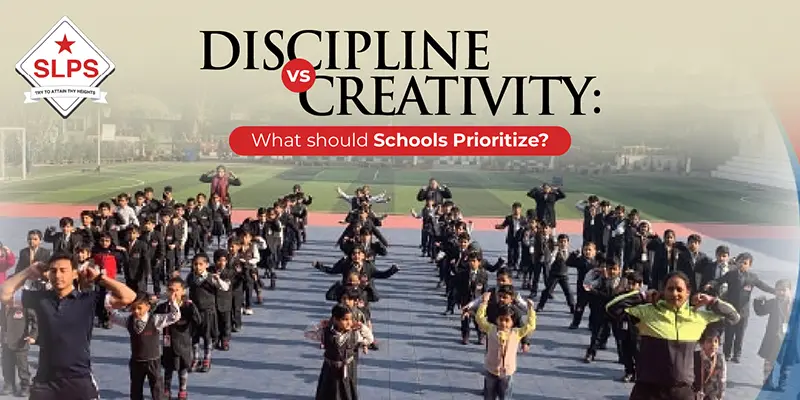
Walk into any classroom and you will see both sides of this debate. One child finishes every task on time but hesitates to share an unusual idea. Another brings fresh thoughts to every activity but struggles to follow instructions or meet a deadline.
Which child is better prepared for life? Neither, unless the school helps them improve the skill they lack.
Discipline gives children routine, patience and responsibility. Creativity helps them question, imagine and find new answers. Schools in 2026 cannot afford to treat these qualities as opposites. Students need structure, but they also need enough freedom to think in their own way.
Discipline vs Creativity: What Should Schools Prioritize in 2026 for Better Student Growth?
Discipline Teaches Responsibility Many parents connect discipline only with punishment. In school, it should mean much more than that. A disciplined child learns to pack a school bag, reach class on time, complete work and listen when someone else speaks. These small habits often matter as much as marks because they shape how a student handles daily responsibilities. Discipline helps children:- Follow a regular study routine
- Finish tasks instead of leaving them halfway
- Respect teachers and classmates
- Manage time before tests and projects
- Accept mistakes without blaming others
Creative Learning Builds Independent Thinking
Children often remember what they do more clearly than what they copy from a board. That is where creative learning helps. A geography lesson can include map-making. A maths class can use a simple shopping budget. Students studying the environment can collect leaves, record local weather or discuss waste in their neighbourhood. These tasks do not replace textbooks. They help children understand what the textbook is trying to teach. Schools can make lessons more active through:- Classroom debates
- Science experiments
- Story writing
- Group projects
- Art, music and theatre
- Coding and digital activities
- Models, charts and presentations
Why Schools Need Discipline and Creativity Together
The balance becomes clearer in project work. Imagine that a teacher asks students to explain how rainwater harvesting works. The class receives a submission date, basic instructions and a list of points that must be covered. Those rules bring discipline. Students may then choose how to present the topic. One group builds a model. Another prepares a poster. A third gives a short talk. That choice brings creativity. Both parts matter. Without instructions, the project may lose direction. Without choice, every submission may look the same. Children also learn that an original idea takes effort. A good presentation needs planning. A strong story needs editing. A working model may need several attempts. Creativity starts the idea; discipline carries it to completion.Skills Children Need for Future Careers
Future careers will not depend only on how much information a student can remember. Children will need to explain ideas, work with different people and deal with problems that may not have one fixed answer. Useful skills include:- Clear communication
- Time management
- Teamwork
- Leadership
- Digital knowledge
- Decision-making
- Problem-solving
- Willingness to learn
What Parents Should Check While Comparing Schools Near Me
When parents type the best school near me or schools near me, they often begin with location, fees, results and facilities. Those points are important, but they do not tell the full story. Visit the school and notice what happens inside the classroom. Do teachers allow questions? Are students only preparing for exams or are they also doing projects and discussions? What is the school’s response when a child makes a mistake? Parents looking for the best school in Ghaziabad should check:- Teaching methods
- Classroom discipline
- Teacher-student interaction
- Sports and activity options
- Safety arrangements
- Parent communication
- Practical and digital learning

