Home - AI in Kids’ Education: Key Benefits and Risks
AI in Kids’ Education: Key Benefits and Risks
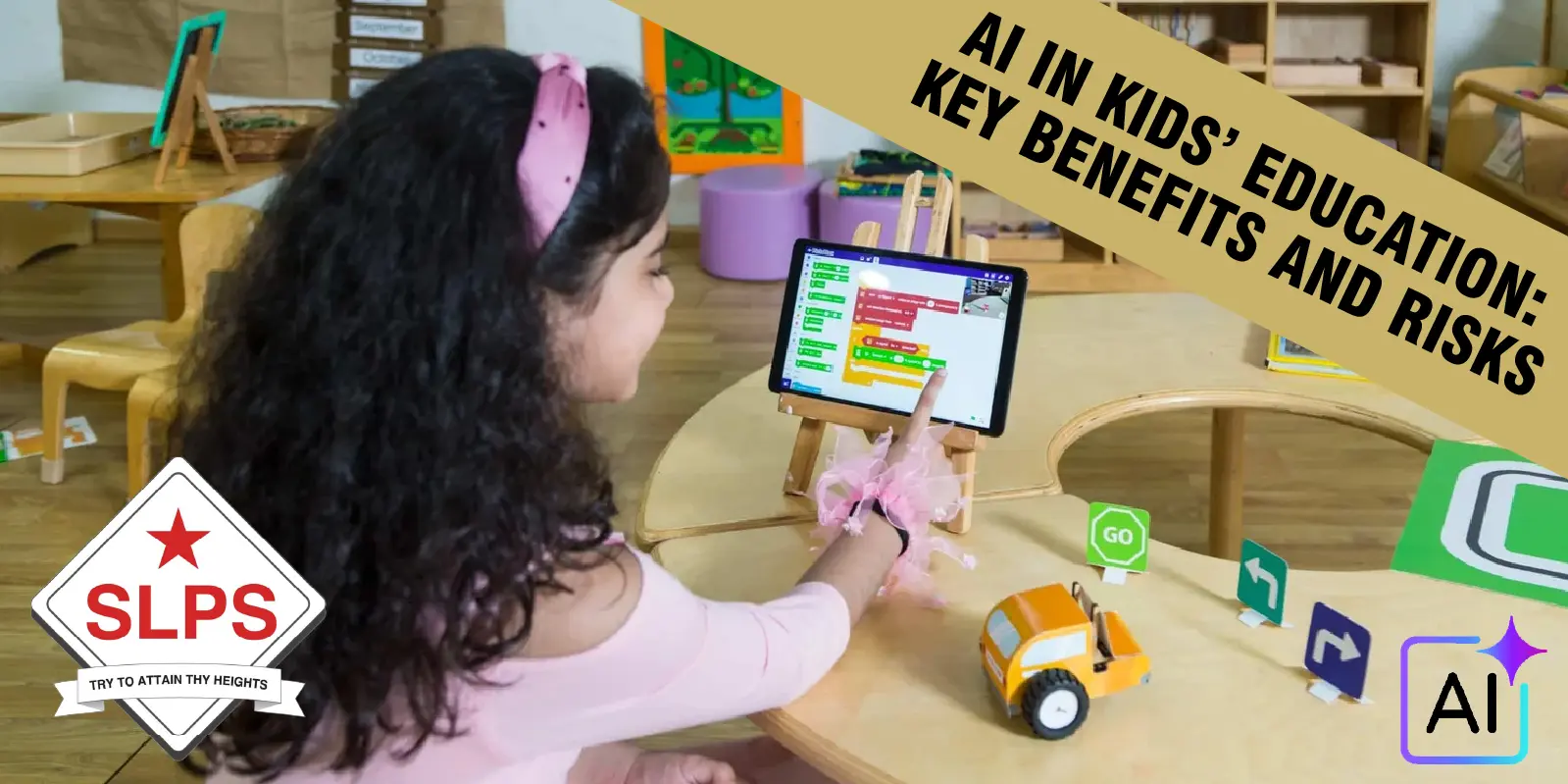
Artificial Intelligence (AI) has its feet in almost every sector, including education. From the online applications that are designed with AI to detect the level of students’ study and set the study level accordingly, to AI educators, the learning process of students becomes interesting and more involved.
But excessive screen time, inability to interact with real-time education, and less human interaction are some of the risks that AI is bringing to a kid’s life. So, is AI a good introduction in the educational sector or just destroying the kids? Let’s move forward with some honest pros and cons of AI in kids’ education.
How AI and Education Work Together?
Prior, assuming AI with education was a dream that has now become a reality. AI in education involves some technology that detects the level of a kid’s study and provides the study material accordingly to enhance their level. It may sometimes destroy the kids by overuse of technologies and less interaction with real-time humans. But if the technology is used with smartness and only with the goal of making students better learners at their own pace instead of providing more.Pros of AI-Based Learning for Kids
Let’s first discuss the benefits that AI has brought to the educational sector for the kids. They can be different for everyone, but here are some common ones:1) Personalised Learning Experience:
AI detects the learning ability, speed, pattern, strengths and weaknesses of the students and automatically designs the course accordingly.-
- Adjust study level automatically
-
- Provide the option for customised lessons
- Extra practice lessons for a particular subject
2). 24*7 Learning Support:
Traditional classrooms have fixed timings but AI classrooms offer assistance to the students all day long and at any time.-
- Kids can get help with homework
-
- Advanced practice after school
- Independently revise the concepts without fear.
3). Interactive and Engaging Content:
Studying through AI is found to be more engaging and interactive because it uses these for the complex concepts to make them easier:-
- Visual explanations
-
- Gamings
-
- Voice interaction
- And quizzes
4). Immediate Progress Tracking:
This feature of AI encourages the students for instant improvements. With AI, students get real-time corrections of their mistakes, progress reports and parents ‘ and teachers’ insight for tracking performance.5). No More Fear of Making Mistakes:
Some students fear asking questions in the classrooms but with AI, kids get one-to-one interaction and hence can freely ask their queries with confidence.6). Independent Learning:
As discipline is set in the traditional classrooms but with AI, students learn it independently:-
- Curiosity beyond textbooks
-
- Online Study Time Management
- Exploration beyond the limited syllabus
Cons of AI-Based Learning for Kids
Now that you have seen the benefits of AI learning for kids, there are some risks associated with it as well. Let’s have a look at them:1). Increase in screen time:
AI learning requires gadgets that unknowingly will increase the screen time of kids:-
- Increase digital exposure
-
- Affect eyesight and posture
- Reduce physical activity
2). Reduce human interaction:
Human interaction is necessary for kids as it will enhance social skills, teamwork and emotional understanding in them. But with AI:-
- Less teacher-student bonding
-
- Few peer interactions
- Zero emotional and social development.
3). Data Privacy Concerns:
An AI platform collects the personal data that could lead to:-
- Child data stealing
-
- Online privacy concern
- Cybersecurity risk
4). Less Critical Thinking Development:
AI encourages kids to depend upon the technology for direct answers instead of thinking for themselves for logic that reduces independent problem solving. Above all, AI couldn’t even sense emotions. It couldn’t teach you by sensing your stress or happiness levels. So AI can be used as a supportive learning system, but can’t replace traditional learning systems.Final Verdict: Is AI Learning Good for Kids?
AI-based learning can be highly beneficial when used as a supplement, not a replacement for traditional education. It would be worth it if used in balance by both parents and teachers:-
- Combine AI tools like ICT 360 Computer with the teacher’s guidance under a structured Approach towards Academics.
-
- Monitor the screen time while ensuring balanced participation in Activity Clubs
-
- Choose the authorised, secure and age-appropriate platforms only, especially during Admission processes.
- Don’t forget to inculcate social and emotional values through offline activities and regular communication via Contact Us.

